Toddler Nightmares: Calm Scripts and Simple Sleep Fixes
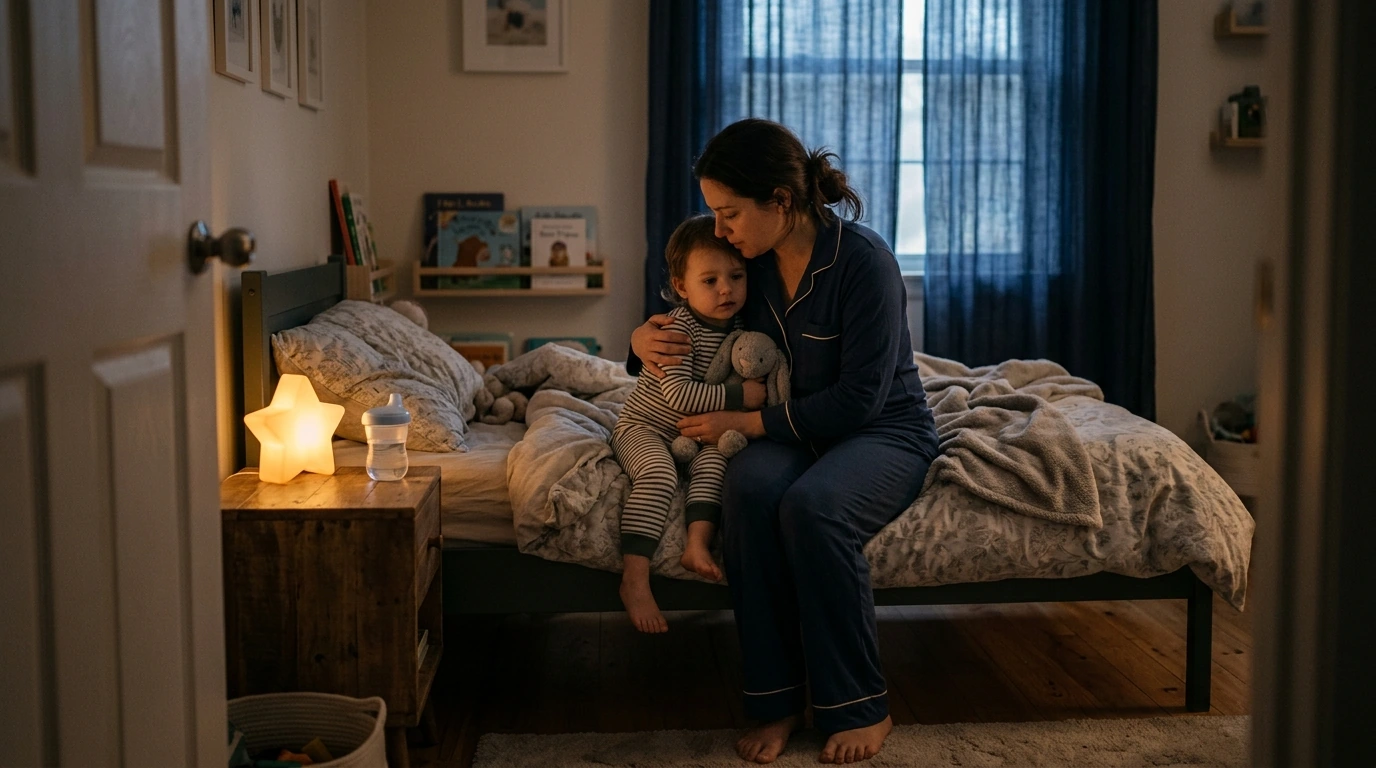
What to Do When Your Toddler Has Nightmares (Without Turning Bedtime Into a Battle)
Nightmares can feel intense for toddlers and exhausting for parents—especially when wake-ups become frequent. The goal in the moment is simple: help your child feel safe fast, then help their body settle back into sleep. Over time, small daytime and bedtime habits can reduce repeat nightmares and rebuild confidence around bedtime—without adding complicated routines you can’t keep up with.
Nightmares vs. Night Terrors: Knowing What You’re Seeing
Before you troubleshoot, it helps to identify what kind of night disruption is happening.
- Nightmares usually happen in the second half of the night. A toddler may wake fully, call for you, want comfort, and sometimes remember scary images.
- Night terrors often happen earlier in the night. A child may look awake (crying, yelling, sweating) but seem confused, hard to console, and typically won’t remember it in the morning.
- If your toddler can talk about a scary dream and wants reassurance, treat it like a nightmare: calm, connect, and re-anchor them in safety.
- If episodes are frequent, prolonged, or paired with breathing issues, talk with a pediatrician to rule out sleep disruptions. Helpful overviews are available from HealthyChildren.org (American Academy of Pediatrics) and the Mayo Clinic.
What to Do in the Moment: A Calm, Repeatable Nighttime Script
When your toddler wakes scared, your job isn’t to “solve” the dream—it’s to steady their nervous system. Aim for low stimulation, simple words, and predictable steps.
- Keep lights low and your voice quiet. Bright light and big energy can flip the brain into “fully awake,” making it harder to fall back asleep.
- Use short, steady reassurance. Try: “You’re safe. I’m right here. That was a dream.” Repeat the same line instead of adding lots of new words.
- Offer physical comfort if welcome. Hand on the back, a cuddle, slow rocking, or simply sitting close can help a toddler feel protected.
- Ground the senses. Name three safe things in the room, take three slow breaths together, offer a sip of water, or hand them a comfort item.
- Skip the deep interview at 2 a.m. Avoid lengthy questioning about the dream during the night; save details for daytime when the nervous system is calm.
Quick responses that help vs. responses that can escalate
| Try This | Instead of This | Why It Works |
|---|---|---|
| “You’re safe. I’m here.” | “There’s nothing to be scared of.” | Validates feelings without arguing; safety cues calm the body faster. |
| Stay in dim light for 1–3 minutes | Turning on bright lights and starting play | Reduces stimulation so the child can return to sleep. |
| A brief comfort routine (hug, water, back rub) | A long negotiation (snacks, screens, moving rooms every time) | Predictability lowers future wake-ups driven by habit. |
| Daytime talk about scary themes | Deep dive into dream details during the night | Processing is easier when rested; nighttime analysis can reinforce fear. |
The Morning After: Resetting Confidence Without Reinforcing Fear
The next day is your opportunity to help your toddler feel capable again—without turning the nightmare into a “big story” that follows them into the next night.
- Do a simple check-in. “Did you have a scary dream?” If yes, acknowledge it and keep it brief.
- Help them change the ending through play. Draw the dream and add a helper (a dog, superhero, parent, flashlight) or a “safe door” that locks the scary thing out.
- Separate dream from reality. “Dreams feel real, but they’re stories our brain makes.”
- Praise coping. “You called for help and calmed your body. That was brave.”
- Create a daytime plan for repeat themes. If it’s always monsters/animals, choose one steady support (nightlight or special stuffed animal “helper”) plus a short comfort phrase.
Bedtime Foundations That Reduce Nightmares
Nightmares aren’t always preventable, but bedtime structure can lower the odds by reducing overtiredness and stress. The National Sleep Foundation highlights how consistent routines support healthier sleep in children.
Comfort Tools That Keep Bedtime Simple (Not a Power Struggle)
When to Get Extra Support
A Guided Plan for Parents Who Want Step-by-Step Help
If you want ready-to-use wording for the middle of the night plus a simple routine that reduces repeat wake-ups, check out What to Do When Your Toddler Has Nightmares | Ebook Guide for Parents | Practical Comforting Tips & Bedtime Solutions. It’s designed for quick reference—so you’re not trying to invent the perfect response while half-asleep.
For parents also working on daytime cooperation and calmer communication (which can lower bedtime tension), Positive Parenting Tips Guide | Gentle Parenting eBook | Empathic Communication | Digital Download for Moms & Dads can help you build steady scripts and connection habits that carry into bedtime.
FAQ
How long do toddler nightmares usually last?
Many toddler nightmares are short-lived and fade within days or a couple of weeks, especially when sleep is consistent and stress is lower. It’s also common to see clusters during developmental leaps, big changes, or illness; talk with a pediatrician if nightmares are persistent, severe, or driving daytime anxiety.
Should a toddler sleep in the parents’ bed after a nightmare?
Short-term comfort is okay if it helps everyone reset, but a consistent plan prevents it from becoming the only way your child can fall back asleep. Many families find it easier to comfort the child in their own room, then gradually reduce how long a parent stays.
What if nightmares started after a scary show or book?
Pause the scary content for a while and swap in calming, familiar stories—toddlers often replay images they don’t fully understand. Use daytime drawing or pretend play to “change the ending,” and expect improvement over a week or two as the new routine and safer imagery take hold.












Leave a comment