Minimalist Travel Packing Planner for Carry-On Calm
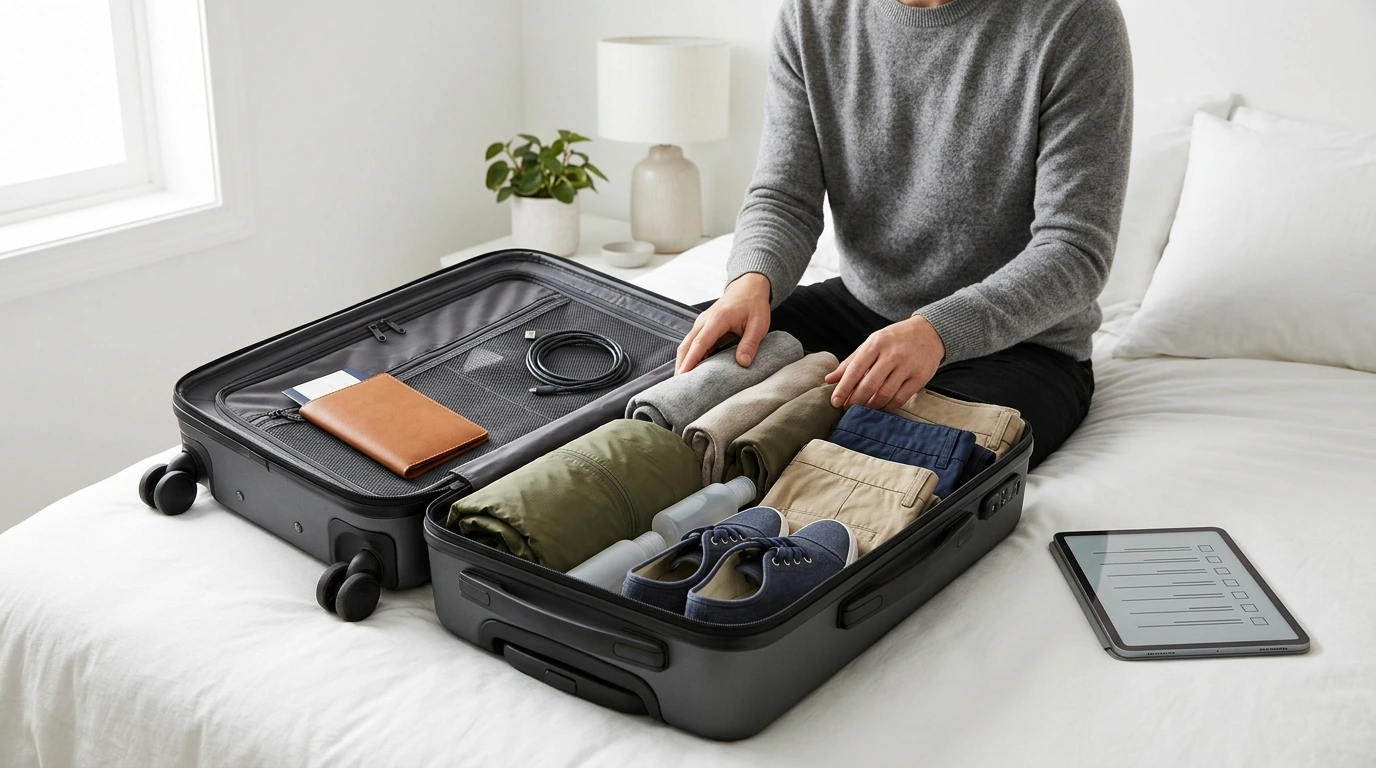
Minimalist Travel Packing Planner: A Digital Guide for Light, Smart, Stress-Free Trips
Packing light gets easier when decisions are made once, then reused trip after trip. A minimalist approach focuses on versatile outfits, a tight toiletry kit, and a simple system for tracking essentials—so the bag stays small and the trip stays calm.
Why minimalist packing feels easier (and travels better)
- Less to carry: A lighter bag moves faster through airports, fits better on trains, and won’t punish you on stairs or cobblestones.
- Fewer decisions: A short, repeatable checklist replaces last-minute scrambling and second-guessing.
- Fewer duplicates: Aim for one item per job—or one item that handles multiple jobs (like a layer that works for planes and evenings).
- More flexibility: Versatile layers adapt to weather and plans without bringing “just in case” backups for everything.
Start with the trip framework: duration, climate, and laundry plan
Minimalist packing starts before you touch a suitcase. Lock the trip assumptions first, then choose clothing counts that match.
- Pick a laundry rhythm: Decide upfront: no laundry, sink-wash, laundromat, or hotel service.
- Check weather ranges and microclimates: Look at day/night swings, rain probability, and indoor A/C (which can feel like winter in summer).
- Confirm activity intensity: City walking, business meetings, hiking, beach time—each changes fabrics, shoes, and layers.
- Decide carry-on only vs. checked bag: Then confirm airline size/weight limits (policies vary by carrier and route).
- Set a shoe limit early: Usually 1–2 pairs. Shoes drive space, weight, and outfit choices more than almost anything else.
For airline rules and baggage guidance, it helps to verify official references like IATA baggage guidance and your specific airline’s current policies.
The capsule method: outfits that mix, match, and repeat
A capsule isn’t about owning less—it’s about bringing pieces that work together in more combinations than you’d expect.
- Choose a simple color palette: If every top matches every bottom, you stop packing “pairing insurance.”
- Prioritize layers: Base + mid + shell beats a single bulky item that only works in one temperature range.
- Use repeatable items: Pants/skirts worn 2–4 times, outerwear worn daily, and tops rotated.
- Add one “nice” outfit: Make it adaptable with accessories so it can go casual or dressy.
- Build around two anchors: Your most comfortable walking outfit and your most flattering photo outfit—then fill gaps with mix-and-match basics.
Minimalist packing guide by trip length (carry-on friendly)
| Trip length | Tops | Bottoms | Outer layers | Shoes | Notes |
|---|---|---|---|---|---|
| Weekend (2–3 days) | 2–3 | 1–2 | 1 light layer | 1 pair | Wear bulkiest items in transit; plan 1 outfit repeat |
| Short trip (4–6 days) | 3–4 | 2 | 1–2 layers | 1–2 pairs | One quick-dry top helps; consider sink-wash once |
| Week+ (7–10 days) | 4–5 | 2–3 | 2 layers + rain option | 2 pairs | Plan laundry mid-trip; keep duplicates minimal |
A smart packing list that doesn’t explode: essentials by category
- Clothing: Favor versatile fabrics, quick-dry underwear/socks, and one packable warmth layer. If it can’t work with at least two outfits, it’s a “maybe.”
- Toiletries: Keep liquids compliant for carry-ons and reduce leak risk with solids when possible. The TSA’s liquids rule is a helpful baseline when you’re refining bottle sizes.
- Tech: Use one charging setup (multi-port brick + short cables). Bring only the adapters you’ll truly use, plus a simple backup plan (like one spare cable or a small battery).
- Documents & money: IDs, travel insurance info, reservations, and one primary payment method plus a backup. Keep a photo of key documents in a secure place.
- Health & comfort: Basic meds, blister care, and a compact sleep aid (earplugs/eye mask). For destination-specific guidance, check CDC Travelers’ Health.
How a digital packing planner keeps you consistent
A minimalist system only works if it’s easy to repeat. A digital planner turns “figuring it out” into “press copy and adjust.”
- Reusable checklists: Clone a template for weekend, work, beach, or winter trips.
- Pre-trip timeline: Assign what to buy, wash, or charge on specific days so packing doesn’t become a midnight project.
- Custom fields: Note what you actually wore, what stayed unused, and what you wished you had—then refine the list next time.
- Stress reducers: A last-look checklist for passport, wallet, phone, chargers, and meds prevents the most common “turn around and go back” moments.
- Print or mobile-friendly: Check items off while you pack, then use the same list for the return trip.
Using the Minimalist Travel Packing Planner (digital download) in 10 minutes
If you want a ready-made structure you can reuse for every trip, start with the Minimalist Travel Packing Planner | Digital Packing Guide for Light, Smart & Stress-Free Trips and tailor it to your route.
- Pick a template: Carry-on weekend, week-long, or multi-city.
- Set your laundry assumption: None / once / twice—then adjust clothing counts accordingly.
- Fill in “always items” once: Charger kit, meds, sunglasses, reusable bottle, and a compact tote.
- Add trip-specific items as a short add-on list: Swimwear, meeting attire, hiking layer, or cold-weather accessories.
- Do a final exit scan: Keys, wallet, ID, phone, chargers, meds—then stop packing.
For travelers who also want a quick way to stay grounded during busy itineraries, Daily Affirmations for Abundant Wealth | Audio Course | Money Mindset & Prosperity | Abundance Manifestation can be a simple listen while you organize, commute, or unwind on travel days.
Common overpacking traps (and quick fixes)
FAQ
What is the 3-3-3 rule for travel packing?
The common version is 3 tops, 3 bottoms, and 3 pairs of shoes, creating multiple outfit combinations without overpacking. It’s easy to adapt by climate and dress code (for example, add a warmer layer for cold destinations) and many carry-on travelers reduce shoes to 1–2 pairs to save the most space.











Leave a comment